The math has stopped making sense for millions of Americans. Groceries are up dramatically compared to just a few years ago. Health insurance premiums continue climbing. Rent in many U.S. cities now consumes half a paycheck before you’ve bought a single meal. For retirees on fixed incomes, the gap between what Social Security provides and what a comfortable American life actually costs has become, for many people, increasingly difficult to manage.
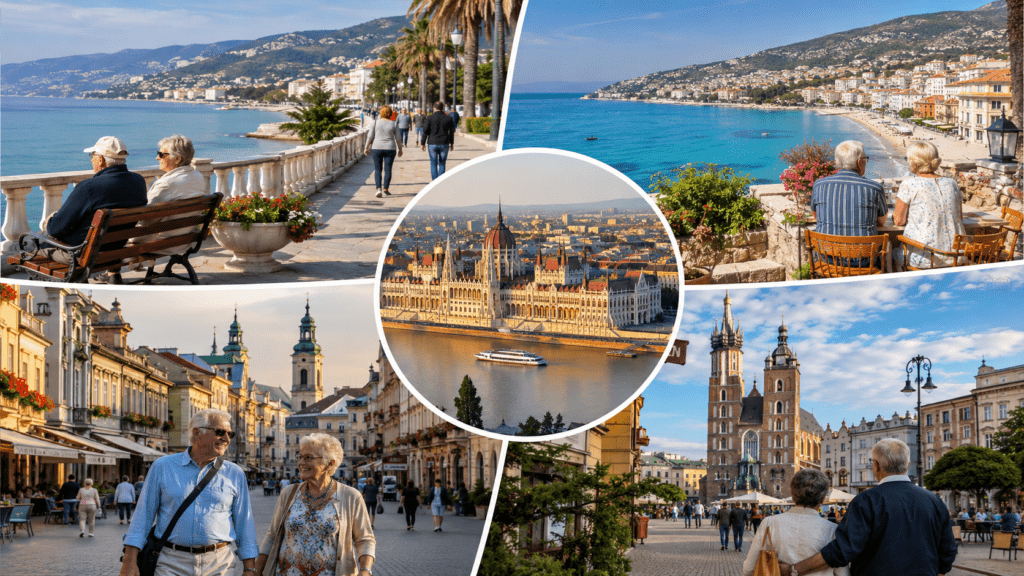
Europe is the answer more Americans are arriving at — and not the Paris-and-Amsterdam Europe of travel magazines. Eastern and Southern Europe offer a standard of living that would cost three to four times as much in the United States, at prices that make a fixed American income feel like genuine purchasing power again.
This guide covers the 10 cheapest countries in Europe for Americans in 2026 — realistic monthly budgets, what you actually get for that money, visa basics, and the honest tradeoffs. We’ve ranked them by practical value for Americans: affordability, English accessibility, residency pathways, safety, infrastructure, and overall livability.
A Note on “Cheapest” vs. “Best Value”
Pure cheapness and best value are not the same thing. The absolute cheapest countries in Europe — places like Moldova or Kosovo — offer extremely low living costs but also weaker infrastructure, fewer English speakers, and more limited long-term residency options for Americans.
This list focuses on countries that combine genuine affordability with the services, safety, healthcare access, and legal stability that make long-term living realistic for Americans seeking an affordable retirement in Europe.
1. Bulgaria — Best Value EU Country for Americans
Monthly budget (couple): €1,400–€2,200
EU member: Yes | Schengen: Yes (since 2025) | Euro: Yes (since 2026)
Bulgaria offers one of the lowest costs of living in the European Union while still providing full EU protections, Schengen access, and eurozone integration. In cities like Varna along the Black Sea coast, Americans can still rent quality apartments for a fraction of Western European prices.
Bulgaria’s combination of advantages is difficult to beat for Americans: EU membership, Schengen border-free travel, the euro currency, the EU’s flat 10% income tax structure, Black Sea coastal living, and overall costs low enough to allow a comfortable lifestyle on a modest retirement income.
A two-bedroom apartment in Varna near the Black Sea typically rents for €400–€700/month. Private specialist healthcare visits often cost €30–€80. Dental care can be 20–30% of comparable U.S. pricing. Dining out at a quality restaurant rarely exceeds €15 per person outside luxury tourist areas.
The residency pathway for American retirees is relatively accessible — proof of pension income, accommodation, and health insurance are generally the primary requirements. Permanent residency becomes available after five years of legal residence.
Best for: Retirees on fixed incomes, property buyers seeking long-term value, Americans wanting full EU/Schengen benefits at the lowest practical cost in the European Union.
Honest tradeoff: Administrative bureaucracy can be slow, and the language barrier still matters outside major expat areas.
2. Albania — Europe’s Cheapest Mediterranean Option
Monthly budget (couple): €1,200–€1,800
EU member: No | Schengen: No | Currency: Albanian Lek
Albania has quietly become one of the most attractive low-cost destinations in Europe for Americans seeking Mediterranean living without Western European prices. Americans can stay visa-free for up to one full year, which is unusually generous by European standards.
The Albanian Riviera along the Ionian Sea offers stunning coastline that rivals parts of Greece and Croatia at a fraction of the cost. Cities like Sarande and Vlore continue attracting expats looking for warm weather, relaxed living, and low expenses.
A couple can often live comfortably in Albania for €1,200–€1,800 per month depending on location and lifestyle. Restaurant meals, local produce, transportation, and long-term apartment rentals remain exceptionally affordable compared to Western Europe.
Tirana, the capital, surprises many Americans with its café culture, modern restaurants, growing international community, and energetic atmosphere.
Residency pathways exist for foreigners, including pension-based permits, but the long-term legal framework remains less standardized and predictable than EU alternatives.
Best for: Budget-conscious retirees, digital nomads, and Americans wanting Mediterranean coastal living at the lowest realistic cost point.
Honest tradeoff: Not part of the EU or Schengen Area, infrastructure varies significantly by region, and long-term residency planning requires more flexibility.
3. Romania — EU Membership With Strong Infrastructure
Monthly budget (couple): €1,200–€2,000
EU member: Yes | Schengen: Yes (since 2024) | Currency: Romanian Leu
Romania remains one of the European Union’s most affordable larger countries for Americans while offering surprisingly strong infrastructure, fast internet, and vibrant city life.
Bucharest is far more cosmopolitan than many Americans expect — modern shopping centers, excellent restaurants, strong tech sector growth, and extensive international connections at prices dramatically below Western Europe.
Cities like Cluj-Napoca have developed reputations as some of Eastern Europe’s most livable mid-sized cities, especially among remote workers and younger expats.
Romania joined the Schengen Area in 2024, significantly improving travel integration with the rest of Europe. The country has not yet adopted the euro, however, meaning exchange-rate considerations remain part of daily life.
Healthcare costs, rent, transportation, and dining remain highly affordable relative to most EU countries.
Best for: Americans wanting larger-city infrastructure, strong internet, EU integration, and more urban energy at Eastern European prices.
Honest tradeoff: Winters can be cold, bureaucracy still requires patience, and the Romanian language presents a learning curve despite strong English among younger residents.
4. North Macedonia — Ultra-Affordable Balkan Living
Monthly budget (single person): €600–€900
EU member: No (candidate) | Schengen: No | Currency: Macedonian Denar
North Macedonia offers some of the lowest living costs anywhere in Europe while maintaining a generally safe and welcoming environment for foreigners.
Skopje has undergone major redevelopment over the past decade, and the country’s natural scenery — lakes, mountains, and national parks — is genuinely impressive for outdoor-oriented retirees or travelers.
Daily costs remain extremely low by European standards, including restaurants, rent, transportation, and groceries.
Americans can stay visa-free for up to 90 days, though long-term residency requires additional planning and legal assistance.
Best for: Extremely budget-conscious travelers or shorter-term European living.
Honest tradeoff: Smaller expat community, more limited healthcare infrastructure, and fewer direct international flight connections.
5. Serbia — Vibrant Urban Energy at Low Cost
Monthly budget (couple): €1,000–€1,600
EU member: No (candidate) | Schengen: No | Currency: Serbian Dinar
Serbia stands out for Belgrade — one of Europe’s most energetic and underrated capitals. The city has developed a strong reputation among digital nomads and younger expats thanks to its nightlife, café culture, affordability, and surprisingly modern urban environment.
Monthly living costs remain significantly lower than most EU capitals while still offering strong restaurant culture, active social life, and improving infrastructure.
English is commonly spoken among younger Serbians, especially in Belgrade and Novi Sad.
While Serbia remains outside the EU and Schengen Area, it continues moving toward closer European integration.
Best for: Younger expats, remote workers, and Americans prioritizing urban lifestyle and social energy over EU legal integration.
Honest tradeoff: Long-term residency frameworks remain less stable than EU countries, and winters in Belgrade can be cold and gray.
6. Hungary — Beautiful Capital, Lower EU Costs
Monthly budget (couple): €1,400–€2,200
EU member: Yes | Schengen: Yes | Currency: Hungarian Forint
Budapest consistently ranks among Europe’s most beautiful capitals. Historic architecture, thermal baths, strong public transportation, vibrant food culture, and comparatively affordable costs continue attracting expats from around the world.
Hungary offers full EU and Schengen access while remaining significantly less expensive than Austria, Germany, or France.
The country has not adopted the euro, meaning the Hungarian Forint introduces some currency volatility for Americans living on dollar-based income.
Budapest remains the primary international hub, while smaller Hungarian cities offer lower costs but fewer English-speaking services.
Best for: Americans who prioritize city culture, architecture, and EU access at lower-than-Western-Europe pricing.
Honest tradeoff: Political direction under the current government may concern some Americans, and costs are higher than Bulgaria or Albania.
7. Poland — Modern, Stable, and Well Connected
Monthly budget (couple): €1,500–€2,500
EU member: Yes | Schengen: Yes | Currency: Polish Zloty
Poland has become one of Eastern Europe’s strongest economies, combining modern infrastructure with lower living costs than Western Europe.
Warsaw and Krakow are genuinely international cities with excellent transportation, modern healthcare facilities, growing expat communities, and strong English-language accessibility.
Krakow in particular has become popular among Americans seeking a balance between affordability, beauty, and European lifestyle.
Poland also maintains strong NATO and U.S. ties, which some Americans view positively when evaluating long-term stability.
Best for: Americans seeking strong infrastructure, modern cities, safety, and deep EU integration at lower costs than Germany or Austria.
Honest tradeoff: Winters are long and cold, and costs continue rising steadily in major cities.
8. Croatia — Adriatic Coastline With EU Integration
Monthly budget (couple): €1,800–€2,800
EU member: Yes | Schengen: Yes | Euro: Yes
Croatia combines spectacular Adriatic coastline with full EU, Schengen, and eurozone membership. Cities like Split, Zadar, and Dubrovnik attract retirees seeking Mediterranean living with strong infrastructure and legal stability.
Croatia’s quality of life is genuinely high — excellent seafood, coastal scenery, island culture, and relaxed pace of life.
The country adopted the euro in 2023, increasing financial stability but also accelerating price growth in some regions.
Tourism has significantly raised prices in prime coastal areas, though inland cities remain more affordable.
Best for: Americans prioritizing Mediterranean coastal living with full EU integration and strong tourism infrastructure.
Honest tradeoff: Rising prices, crowded summers in tourist areas, and less affordability than Bulgaria or Romania.
9. Slovakia — Quiet Stability in Central Europe
Monthly budget (couple): €1,500–€2,200
EU member: Yes | Schengen: Yes | Euro: Yes
Slovakia is often overlooked by Americans, which is partly why it remains attractive. The country offers safety, eurozone stability, and access to Central Europe at costs significantly below neighboring Austria.
Bratislava sits less than an hour from Vienna, allowing easy access to one of Europe’s major cultural capitals while maintaining lower daily living costs.
Outside Bratislava, smaller Slovak cities provide mountain scenery, quieter lifestyles, and even lower expenses.
Best for: Americans seeking stability, eurozone access, and quieter Central European living.
Honest tradeoff: Smaller expat community and less English spoken outside Bratislava.
10. Latvia — Digital Infrastructure and Northern Europe Value
Monthly budget (couple): €1,400–€2,000
EU member: Yes | Schengen: Yes | Euro: Yes
Latvia combines relatively affordable living costs with excellent digital infrastructure, fast internet, and full EU integration.
Riga is one of Europe’s most underrated capitals — compact, walkable, architecturally beautiful, and increasingly attractive to remote workers and younger expats.
Living costs remain well below much of Northern and Western Europe while maintaining strong public services and eurozone stability.
The biggest factor Americans must realistically consider is climate. Latvian winters are long, dark, and cold.
Best for: Americans prioritizing digital infrastructure, safety, and full EU integration at lower costs than Scandinavia or Western Europe.
Honest tradeoff: Harsh winters and smaller English-speaking expat community outside Riga.
Quick Comparison Table
| Country | Monthly Budget (Couple) | EU | Schengen | Euro | English Accessibility |
|---|---|---|---|---|---|
| Bulgaria | €1,400–€2,200 | ✅ | ✅ | ✅ | Good in cities |
| Albania | €1,200–€1,800 | ❌ | ❌ | ❌ | Growing |
| Romania | €1,200–€2,000 | ✅ | ✅ | ❌ | Good (younger generation) |
| North Macedonia | €900–€1,400 | ❌ | ❌ | ❌ | Limited |
| Serbia | €1,000–€1,600 | ❌ | ❌ | ❌ | Good in Belgrade |
| Hungary | €1,400–€2,200 | ✅ | ✅ | ❌ | Good in Budapest |
| Poland | €1,500–€2,500 | ✅ | ✅ | ❌ | Good in cities |
| Croatia | €1,800–€2,800 | ✅ | ✅ | ✅ | Good in tourist areas |
| Slovakia | €1,500–€2,200 | ✅ | ✅ | ✅ | Moderate |
| Latvia | €1,400–€2,000 | ✅ | ✅ | ✅ | Good in Riga |
What Americans Get Wrong About Cheap European Living
They focus only on rent.
Your first few months abroad will cost more than your long-term monthly budget. Security deposits, residency paperwork, legal assistance, furniture, healthcare setup, and administrative costs add up quickly.
They underestimate bureaucracy.
Opening bank accounts, obtaining residency, registering addresses, and dealing with local government systems often takes far more patience than Americans expect. Professional legal assistance is usually worth the expense.
They forget U.S. tax obligations.
Moving overseas does not eliminate IRS filing requirements. Americans still file U.S. tax returns on worldwide income regardless of where they live. Qualified U.S. expat CPAs are essential for long-term planning.
They compare local life to tourist pricing.
Restaurant prices in tourist districts during summer do not reflect realistic year-round living costs. Local neighborhoods, markets, and long-term rentals matter far more than peak-season tourism prices.
The Bottom Line
Europe’s more affordable countries offer many Americans something increasingly difficult to maintain in the United States: a comfortable lifestyle on a realistic retirement income.
For Americans seeking the strongest balance between affordability, infrastructure, healthcare access, and long-term stability, Bulgaria remains one of the best overall values in Europe today. For those prioritizing Mediterranean lifestyle and pure affordability, Albania continues attracting growing interest despite remaining outside the EU.
At the same time, countries like Croatia, Poland, or Hungary may better fit Americans who prioritize larger expat communities, warmer climates, or stronger international infrastructure even at somewhat higher costs.
The real question is not simply which country is cheapest — it is which country realistically fits your income, health needs, lifestyle preferences, and long-term goals.
That is exactly what we help Americans evaluate at GlobalRelocateUSA.com.
Ready to Find the Right Country for Your Situation?
Our free relocation assessment helps Americans compare affordable European retirement destinations based on income, timeline, healthcare needs, and lifestyle goals.
The assessment takes about four minutes and helps clarify which countries realistically fit your situation.
GlobalRelocateUSA.com provides informational content for Americans considering international relocation. We are not tax advisors, attorneys, or immigration specialists. Cost-of-living figures are estimates based on 2026 data and vary by lifestyle and location. Always consult qualified professionals — including a U.S. expat CPA and local immigration attorney — before making relocation decisions.
Leave a Comment